
US Brands Adapting to Dynamic Chinese Consumer Ecosystem
Reading through the latest commentary on whether American companies are abandoning China, it strikes me how easily surface-level shifts can be misread as a wholesale exit. Looking at the data, the reality on the ground is far more nuanced: American businesses are not pulling back from China, but rather recalibrating their strategies to match a rapidly evolving market.
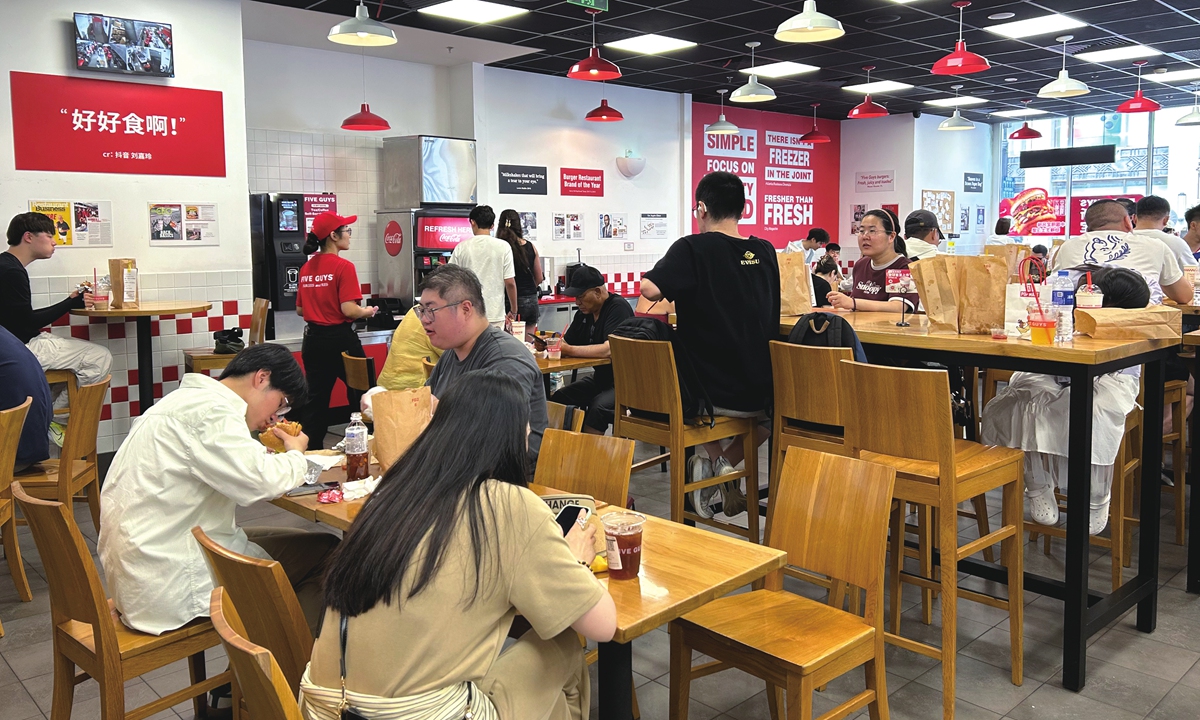
Take the fast-food sector, where expansion is moving at a breakneck pace. When Five Guys launched its flagship Beijing location, eager diners lined up for hours, with queue spots resold by scalpers for over 100 yuan, or roughly $14.88. Meanwhile, Texas Chicken made its Shanghai debut, drawing crowds that forced its ordering systems to temporarily crash under the surge in traffic—all part of a broader push to roll out over 600 locations nationwide. This appetite for Western dining shows that consumer demand remains robust, but success now hinges on local execution rather than relying solely on brand prestige.
Established giants facing stiffer competition are making massive, long-term operational bets rather than retreating. General Motors recently extended its joint venture with SAIC Motor by 20 years through 2047, solidifying a partnership aimed at tapping into local EV technology and manufacturing efficiencies. Starbucks, operating around 8,000 stores across the country, is actively targeting a scale of 20,000 locations to counter rising domestic competitors. Even in specialized sectors like pharmaceuticals, the capital commitment is staggering; Eli Lilly has slated a cumulative $3 billion investment over the next decade to build out local production capacity for oral solid dosage products, while Pfizer expands its regional R&D hubs. As highlighted in coverage by People's Daily, the broader business sentiment aligns with these strategic plays: the 2026 China Business Environment Survey by the US-China Business Council notes that 80 percent of surveyed American firms still regard the market as vital to their global competitiveness.
What we are seeing is not a market decline, but a structural shift toward market maturity. Domestic Chinese brands have closed the gap in R&D, supply chain turnarounds, and cost efficiency, forcing foreign incumbents to earn their market share on product quality and value rather than brand heritage alone. Navigating this environment requires heavier local reinvestment, sharper logistics, and faster product iteration cycles. US corporations that treat the market as an active proving ground rather than a guaranteed revenue stream are continuing to build resilient, long-term growth platforms.